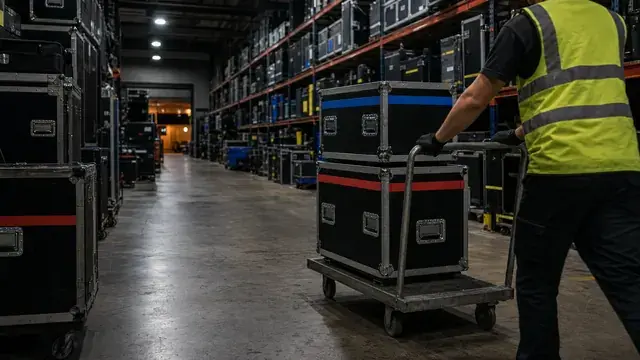
How Do You Handle a Spec Change the Day Before Load-In?

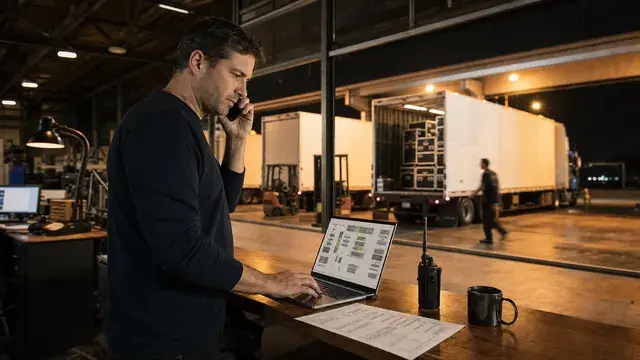
You handle it by treating cross-rental as a core operating layer, not a favor call. When the artist swaps a rider, when a truck arrives short, when a fixture fails on the checklist, the fastest path to protecting the spec is a pre-built cross-rental network of trusted rental houses who can pack, price, and dispatch inside a 24-hour window. Companies that already have those relationships mapped, priced, and one phone call deep are the ones who keep the show on rider. Companies who start the search after the change lands are the ones who eat freight, take a substitute nobody signed off on, and explain it to a production manager who did not ask for a story.
Why is the day-before change becoming the normal case, not the edge case?
Client notice keeps compressing. Heidi at Live Event Productions, talking with Rentman in July, put it plainly: clients are giving less notice, gear availability is tightening, and 48-hour turnarounds are now a regular request. Her team stopped treating it as an exception and built the sub-rental partnerships in advance so a same-week call is a routine dispatch instead of a scramble.
Riders keep evolving too. Festival programmers add acts late. Corporate producers reprogram the run of show after a keynote rewrite. Tour riders update mid-routing when an opening act joins. The Backline Company changeover handbook makes the operating principle explicit: material substitutions must be approved, and every festival should hold contingency equipment in a labelled, accessible position, known to the crew, before the first act touches the stage.
What are the three moments that trigger an emergency cross-rental?
- A rider change or artist swap that adds inventory you did not quote.
- A truck manifest short (missing case, missing dolly, damaged in transit) discovered on load-in day.
- A pre-show failure on the checklist (a moving head that will not calibrate, a console that will not boot, a wireless pack rejected by the RF coordinator).
The response window is the same in all three. You have hours, not days. The gear either lands before the crew starts stringing cable, or the spec quietly drops.
How do you build a cross-rental network before you need it?
The right time to build it is when nothing is on fire. That means keeping a shortlist of three to five rental houses per region who match your inventory tier, having a signed vendor agreement on file, and knowing their after-hours dispatch number. It also means being useful to them first. Sub-rental is a two-way market. The houses who pick up when you call are the houses you have already helped.
Practical checklist for building the network:
- Map your gear stack by category (line array, moving lights, video processing, RF, consoles, comms).
- For each category, identify three regional partners who spec-match and one national partner who ships.
- Confirm each partner's minimum notice, weekend and after-hours rates, and cross-border handling if applicable.
- Store the sheet where your project managers can reach it in ninety seconds, not in an inbox thread.
- Trade rentals both directions during quiet weeks so the relationship holds when the calendar heats up.
Heidi's team runs the same play by pricing labor higher relative to gear, which gives them margin to absorb a sub-rental without renegotiating the client contract. It is a positioning move as much as an operations move.
What does a clean emergency cross-rental transaction look like?
A clean one runs in four steps. Confirm the shortfall in writing with the production manager or artist rep, so the substitution has an approval trail. Query two or three partners at once with the exact model, quantity, dates, and delivery point. Lock the first credible yes with a purchase order rather than an email promise. Book the freight before you tell the client the problem is solved.
The failure modes are all shortcuts. Verbal approval that never gets written down. A single-vendor query that leaves you exposed if the answer is no. A confirmed rental with unconfirmed freight, so the gear is in a warehouse two states away with no truck against it. A "close enough" substitute that the artist's tech rejects at soundcheck.
Where does an operator-led marketplace fit in?
Vendor networks built by rental operators, for rental operators, are catching up to what tour production has done privately for decades. AKA Event Productions in Denver publishes cross-rental positioning plainly: touring-grade inventory, factory-supported line array, available for B2B sub-rental across the region. That is the model that scales. Inventory that is show-ready, maintained to spec, and priced for peer transactions, offered through a network that operators trust.
GearShare exists to make that network searchable. When a project manager needs eight moving heads on Tuesday at 2 PM, the difference between finding them in ninety seconds and finding them in ninety minutes is whether the crew keeps rigging or waits. A marketplace built for operators, priced for operators, and populated with inventory operators have actually inspected is the piece that has been missing between the private phone tree and the generic booking site.
When is the right time to say no to the change?
There is a version of this where the answer is no. If the substitution is outside spec in a way that will hurt the show (wrong dispersion pattern on the line array, wrong CRI on the key lights, wrong latency on the wireless), a fast no is more valuable than a slow yes. Cross-rental is a tool for keeping the spec, not a tool for hiding a compromise. Producers who trust your judgment on what will and will not work are the same producers who send the next tour.
Frequently Asked Questions
What counts as an emergency cross-rental versus a planned sub-rental?
A planned sub-rental is scoped and priced during quoting, weeks or months before load-in, because a job clearly exceeds your standing inventory. An emergency cross-rental is a fill triggered by a change or failure inside the 24 to 72 hour window before doors. Both use the same network of partners. The difference is time pressure and the paperwork discipline required to keep the substitution approved and billable.
How much premium should I expect to pay on a same-week cross-rental?
Expect ten to twenty-five percent above your standard peer rate for a genuine same-week or next-day pull, more if it requires after-hours dispatch or weekend delivery. Regular partners will hold rates closer to standard because the relationship is reciprocal. One-off vendors will price the urgency. Building the network in advance is the single biggest lever on cost when the emergency hits.
Do I need a written substitution approval every time?
Yes, and it protects both sides. The approval can be a short email or a signed change order, but it needs the model, quantity, dates, and the signature or reply of the production manager or artist rep with authority. Verbal approvals disappear when someone else takes over the desk at midnight, and the person paying the invoice will not accept a phone story as evidence the swap was authorized.
What happens if none of my partners have the gear?
Escalate fast. Widen the geography, accept the freight premium, and query manufacturers directly. Manufacturers often maintain a demo pool or know which rental house is currently sitting on inventory. If the model is genuinely unavailable, present the closest approved alternative with a written case for why it holds the spec, and get the production manager's decision in writing before you book.
How do I keep cross-rental margins healthy when the client did not budget for it?
Two moves. Price labor higher than gear on the original quote, so the labor line has room to absorb a sub-rental without a change order fight. And write cross-rental language into the standard client contract, so a triggered change carries a documented pass-through rate. Clients who understand the mechanics before the change is needed are much easier to bill after the change is made.
How does GearShare help when I already have my own partner list?
Your list covers the calls you know how to make. GearShare covers the ones you do not. It is a searchable inventory layer across rental houses, priced for operator-to-operator transactions, filterable by region and availability. It supplements the network you already have and is where you go when your first three calls come back no.
Cross-rental is the difference between a show that stays on rider and a show that gets a footnote in the debrief. GearShare is the network we are building for the operators who make that call every week. See how GearShare works for rental houses.